Showing posts with label Garden Management. Show all posts

Gardening in North Texas


Having come from farm country in Illinois to the wilds of Texas was quite an adjustment to my thinking of how to garden. Thinking of vegetable gardens as a huge spring planting event followed by a slow growing season that extends through a big portion of the summer. It was and still is where my mind automatically wants to go in planning. Its been hard to get used to for me so I thought I would pass on some tips to non-native Texans wanting to garden here. I can only give an account for North Texas, so if you live in other parts of the state you will have to contact your local county Extension office for planting dates.


Vegetable Gardening:

  • There are two short gardening seasons. One is spring, the other in fall
  • Cole crop vegetables like broccoli tend to bolt faster if planted in the spring garden because our soil heats up so fast. 
  • Spring planting starts as early as late-January to early-February which includes onions then potatoes, broccoli, lettuces, peas. Warm season plants like tomatoes and peppers are best planted at the end of March.
  • Varieties of vegetables chosen need to be suited for shorter growing seasons. 
  • Tomatoes can be a challenge to grow here. Temperature changes seem to be the culprit to tomato production. If our temperature here doesn't stay mid-range long enough we miss bloom set time. If it gets too hot too fast the plants nearly shut down as far as growth. Tomatoes don't like it too hot. With the late spring freezes we've had over the past few years, special care needs to be taken to protect plants that are prone to freezing.
  • Fall planting starts as early as June and that's only to direct sow tomato seeds. Most of the warm season vegetables aren't planted until late July into August. The rest follows all the way to October for cool season vegetables.
  • Watering gardens is required. The rain nearly shuts off in June and doesn't really pick back up until September. Drip irrigation and soaker hoses are some of the best methods because there is less evaporation and it wastes the least amount of water. Overhead watering will do, but it makes plants more prone to diseases.
  • People here report that fall vegetable gardening is preferred because of insect issues being reduced. 
  • Guide for growing vegetables here Aggie Horticulture Home Vegetable Gardening and a nice printable vegetable guide.

Having a bit of foreknowledge of what to expect helps to better prepare for each season. Each region has its unique challenges and it doesn't hurt to get familiar with some seasoned gardeners or your local master gardening program for more information. 

What are your gardening challenges for your area?


Smart Gardening

I love efficiency. With limited time and resources, smart planning helps to maximize what you can do and reduce waste. I study urban garden design because it forces people to be more creative with smaller spaces. When you  can make a space efficient and pleasing to the eye then in my opinion you've succeeded. These urban practices can be applied anywhere, whether you live in the city or in the country.

Patti Moreno from Garden Girl TV is one of my favorite designers of efficient gardening. She does a great job of presenting ideas that we all can apply somewhere in our own backyards or apartments. Today I'm sharing "Raised Beds In The City".


You can adapt her design ideas to meet your needs. I like the chicken houses she's built to fit perfectly on top of the beds. I've seen this done for rabbits also. Its practical design that I think can be carried out into the later years of life when strength and mobility start to become challenging.


Gardening With Friends

Back in March of this year, a small group of my gardening friends out of support for one another, decided to help one of our friends who'd had a difficult past year. Due to family health problems she couldn't get out to work in her garden and keep up with all of the things she wanted to do. So, we put together a plan to help her. We picked a day we would come out, decided what lunch fixings we each were going to bring and the details of the visit. We were set.

When the day arrived we met mid-morning so we could enjoy a cup of coffee before heading out to work. We had all brought our tools and plants to share from our own gardens. After a bit of direction on what to do, we dug in and started planting, moving plants, filling containers and cleaning out the greenhouse. Time flew as we helped each other with the things we could handle. Interestingly, the balance was wonderful. A few women are older and have limitations, but their garden knowledge was phenomenal, while some of us have stronger back and able to lift bags of soil and dig holes. It all worked out and within a few hours we swept through the garden adding new life and encouragement to our dear friend. When lunchtime came we all shared about how fun it was and we shouldn't stop there. We should make the rounds to each of our gardens within the next few months. So that's what we've been doing. Trading plants and giving each other a helping hand in the process. -- So much fun!

OUR ONLY RULE - We wouldn't pull weeds!!

It made me wonder WHY isn't this done more often? It reminds me a bit of the trades made in the old days of things such as a barn raising or crop harvesting time. People often came together to help one another. It just changes the attitude from both sides. Helping in someone else's garden seems less like work AND it was humbling to have help in mine. All around it was amazing.

And, In some ways it held me accountable for preparing for my garden visit and it also made me mindful of what plants I had to share with my friends. Also, after visiting around, it was easier to see what my friends could use that I had growing here. As a result, I think our garden help is going to be a part of our regular social time together for years to come. I wish we had thought of it earlier.

Starting a gardening group is fairly easy. All you need to is a plan and a bunch of people you enjoy spending time around. It can be family or friends with varied skills. Just a willing heart and a bit of sweat and I think it will change how you view gardening.


Setting Up A Plant Database


Yeah, I know this sounds super boring, but to someone who is trying to get a handle on what's growing  in your garden, its a must. I know personally that my brain can only handle so much and I often forget that I have planted certain things. A plant database is also helpful when people come over to look at your garden and want to know the name of each plant. This is a chance for you to appear as a super genius for knowing the scientific names for your plants.


I'm going through this process right now, myself. Its easier to identify a cultivar and variety of a plant when its in full bloom and at its maximum height. If I look through a few good plant databases online, I then have enough information to find what I need.

A few good resources I like to use are:

Dave's Garden - PlantFiles - Non-subscribers are limited to 10 searches per day, but I love the details provided and the great pictures. The feedback from contributors is helpful also. If you subscribe, then you have access to an unlimited amount of searches.

USDA - Plants Database - Great Resource with reliable information that can be broken down by states. It also includes Canada U.S territories, France and Denmark. Printable Fact Sheets and Plant guides are available if you want to create a binder for your garden

The Plant Encyclopedia - This is like the Wikipedia community for plants. Its goal is to collect plant information from around the world. There are already 300,000 plants listed.

There are many others that are state specific, so I'm sure you can find what you need.

**Word of Caution - If you google a plant, be wary of what pops up as reliable. Its better to use information from a university, government agency or other research based guide. You just don't know what you're going to get otherwise.


To make your plant database shine:


  • Take photos of each of your plants when they are at the peak of season for them. 
  • Note growing requirements - sun, shade, water & soil requirements
  • Propagation method and best time to do so
  • Note if its an annual, bi-annual or perennial
  • If seed producing - how to collect & store
  • Dead-heading & pruning needs
  • Supplemental feeding requirements
  • Potential problems such as pests and diseases prone to
  • Hardiness -weather cold or hot and Zone information 
Don't be intimidated that you can't get all of the information, but build it as you go. Now is a great time to start. There is plenty to keep you busy. You will thank yourself later.


What Shall I Name My Garden Beds?

I recently came across an article on bed names and it got me wandering why I haven't named my beds anything special. Instead of always using the location to describe what bed I'm talking about, how about I name them? I'm working out a list and I hope my nameless gardens will have an identity instead of calling them things such as "The bed at the end of the house by the kids bedrooms" or "The bed on the inside of the side gate" ---so lame.

Here's news, according to a post at Dave's Garden I have tons of ways I can name each of them. Of the ones listed I think I do have a bed I need to call-  

  • Murphy Bed - The bed where everything goes wrong 
  • Truck Bed - A bed holding the outdoor grill surrounded with plants.
  • Queen Bed - A bed used to attract bees
I'm sure I could add a few more off of the list. They just make you happy thinking about them.


Others names I have came across are ---

  • The Red Bed -All things blooming are red
  • The Front Yard Garden - Self-explanatory.
  • Ploppers Garden - Where plants just seem to get "plopped" here or there without rhyme or reason.
  • The Garden of Indecision - Wow, have I got a few of those. I'm still undecided on what to plant there.
  • Animal Name Bed or Zoo Garden- All plants in it have an animal names like Tiger Lily, Bear's Breeches, Butterfly Bush and Monkey Grass
  • Rock Garden -Plants are named after songs
  • The Love Garden - Plants about love like Kiss Me Over the Garden Gate, Bleeding Hearts, Love Lies Bleeding, Forget Me-Nots, and Honesty
  • The Secret Garden - Hidden in the back where no one would think to look
Now I could get fancy and give them all posh names to mark us having good-breeding and a prized estate somehow. That would be fun AND funny all at the same time. We could start taking tea in the afternoons near some of the garden beds if it suits us.

Do you have your garden beds named? -----I would love to hear them. Also, if you have ideas on some interesting garden names please post them. This will be such fun!!

By the way, tomorrow we may or may not serve tea out by the Garden of Indecision. I need to decide and get back with you one it. *grin*


Year of the Ladybug


Moving to the country brought an element with it I would never have guessed. Each Spring opens a door to something new outdoors. Our first year we found out everything we wanted to know and then some about grasshoppers. We were plagued by them! I now understand a bit better about a locust-like plague. They ate absolutely everything that was green. They even ate things people told me they didn't like. I guess because everything else was gone, they had to eat something.

Since then we've had the year of the fire ant, wolf spider, butterfly, praying mantis and the flea. Every season we get the opportunity to experience the full gamut of what makes each of them tick. Some years have been great fun and you wish that they would stay. Yet others have been closer to wars. We've fought fire ants and fleas that were everywhere and had the bites and stings to prove it.

What for Spring 2011? I think it will be the beautiful lady beetle aka ladybug.  We've never had so many! I've seen them from juvenile to adult. This has me very curious as to why this year? I'm thankful they've decided to spend their 2011 summer here. We need them.

 I don't treat my yard or gardens with pesticides so this may be a factor in why they've taken up residence. I love it when I see the good insects get a chance to thrive. Its just plain encouraging.

Why do I love Ladybugs so much? Lady beetles eat aphids!  Last year I battled aphids, so I guess word got around in the lady beetle community that my yard was the place to be.  Its a good thing too. Buying packaged lady beetles is a waste of money. Most of them fly away as soon as you get them. I was encouraged to see the juvenile form of the lady beetle out near my blackberry bushes, so I know that they're breeding here. Hopefully that will continue because I need all of the help I can get!

Life Cycle of the Lady Beetle
** image courtesy of Wikimedia Commons

There are several different types of lady-beetles, so you need to do your homework to better identify what you have. The first insects that come to mind for me are the Mexican Bean Beetle and the Squash Beetle. They feed on your plants instead of your aphids. ---not good!


A Day of Deadheading

No, I've not been jamming out to Jerry Garcia and The Grateful Dead. It would be interesting though. Too bad that the radio station wasn't running a Grateful Dead tribute while I was out deadheading in my yard. That would really be cool.

There are several really strange definitions for the term, so I'd better be more specific.

Deadheading  To encourage continued plant growth and beauty by removing spent flowers and seed pods. By removing the dried-up flowers, the plant can use its energy to produce more flowers instead of seeds.

Today I tackled my roses and penstemon.


Rose Bush Needing Deadheading
Penstemon Needing Deadheading


Bucket #1 of 2 Spent Flowers


Hopefully over the course of the next few weeks, I will see the new growth and flowering start again. That's what will make it worth the pink tinged sunburn I got today working on this. It was so nice outside I hated to go inside for breaks. Gardening is such great fun!

Here is a great guide for deadheading I found from Garden Gate magazine. I have subscribed to them for years and I love how much they help with flowers. This is a pdf file to download if you are interested. -- Deadheading Guide

Deadheading today and what tomorrow? I need to start on my garden enclosure, that's what.


Plants Need Air Too

Rows are raised higher to avoid standing water


Do you know what one of the fastest ways to kill a plant? Drown it. Plants need air circulation around their roots... well at least most of them do. The problem is that plants that are over-watered exhibit a lot of the same symptoms as those who need water.
  • wilting
  • yellowing leaves starting at the base of the plant
  • eventual dead or discolored parts of plant that are dying
---ARE ALL SIGNS of OVER-WATERING

It could be other things going on, but check your water amount first. 

To help Environmental Issues you can:
  • Amending your soil - If you have poor draining clay soil -- helps create better air/water circulation for roots
  • Raise the soil level - add compost/soil as above or use raised beds
  • Choosing a better location - some areas are just prone to holding water. Moving the plant is just plain easier.


These are my favorite boots given to me by a dear friend. They keep my feet nice and dry as I sometimes have to wade through parts of my yard to get to my garden. A girl just has to be stylish while she works, ya' know.

Cinder Block Garden

I recently received a comment about my cinder block garden that made me realize I need to elaborate the "why" I chose to use them. Truth is, I have many so I'll try to explain a few.

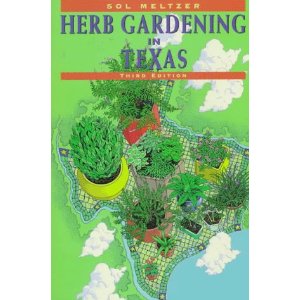
1) Years ago, I read "Herb Gardening in Texas" by Sol Melter There are several illustrations in this showing


beneficial uses of cinder blocks and herbs. The compartments in the cinder blocks lend themselves as natural planters for herbs and plants that need some sort of containment. The blocks also have a level of flexibility in design, whether you want to bury them halfway to mark a border or stack them for a raised bed that is easier on your back.

2) Organic gardening is another factor I had to consider. Yes, there are natural wood alternatives that have a slower decomposition rate than others such as redwood and cedar. Pressure treated wood or railroad ties would not be something I would want to use for raised beds long term when growing food. Cinder blocks meet both the organic and non-rotting need I have here. It seemed an easy choice.

3) Flexibility in design. That sounds really strange when talking about concrete, but I often compare the blocks to my son's building blocks he played with for years. When I built my cinder block beds a few years ago I thought I knew what I wanted. After several seasons of gardening in them, I decided to change my design for more efficiency.


Before

After


I needed to maximize garden space and make the walking paths smaller for weed control. I  am using the same amount of space as before, but have a much greater area for planting. I've liked the option of being able to change things around. That's just one of my quirks. Efficiency is important to me.

4) Good workspace design. I like the fact I can fill most of the block cells with either plants or something more solid such as pea gravel. As you can see in the "after" photo, I have mint planted there. Good ole' invasive mint. *smile* It looks great and saves me the trouble of it choking out the rest of my herbs. Along the sides of the beds I'm going to fill them with pea sized gravel. I am amazed how much that helps when I work in the beds. I can easily place my knee pad on top of the side and work the bed with little strain or pain. It will serve to keep weeds and spiders out of there too. Black widows just love those kind of spaces and I'm not willing to get that up close and personal with them!

5) My goal for building these beds always goes back to sustainability for me. I'm not getting any younger and these beds should hold up for me for years to come. I consider them an investment into the years I may have trouble with handling harder physical labor. They take little effort to maintain and I can make changes to suit my needs.

I googled, "cinder block gardens" and was surprised to find some pretty impressive designs out there. I guess I've only scratched the surface for their uses. I need to get the ball rolling on that!

Keeping Chickens - Deep Litter Method


This is one of the best explanations I've found on the deep litter method of keeping chickens. Gardeners are often warned to not put fresh chicken manure in their garden because the nitrogen is way too high. Add to that the warning of not putting freshly cut mulch around their plants because it will "burn" them. In the decomposition process the mulch robs the soil of any nitrogen and causes the plants to whither and die.

Chicken manure and wood chips seems like a natural pair for making compost. I personally clean out my chicken coop about once per month and rake all of it out to the chicken yard to break down further. I replace the wood chips/shredded paper in the coop and it keeps it fairly clean for laying.

Since we're in an area that has two short vegetable growing seasons (Spring & Fall) I am beginning to prepare the area for Spring of next year with the chicken manure compost. I am currently spreading rabbit manure in my Fall 2010 vegetable garden. The good part about using rabbit manure is that it can be applied fairly fresh and not cause problems.

Building up my soil is continuing to be my biggest challenge here, especially with a limited budget and wanting  such a large area developed quickly. I am seeing the benefits on many of my regular landscaping beds as they mature. Organic matter, beneficial insects and micro-organisms take time to build up and balance out. Every time I see new life in my garden I know I'm just one step closer!


Gardening and Microclimates

A microclimate is the climate of a small, specific place within an area as contrasted with the climate of the entire area, or the "macroclimate." The climate of the entire area is indicated by where a region lies in the USDA Plant Hardiness Zone (simply "zone" for short). - ref. from about.com

Each year I become more and more aware of the many microclimates within my own yard. This time of year is is a good time to check your plants as they begin to bud out and how different each area of your yard progresses. By knowing a few basic things to look for, you will be able to choose better locations for your plants, shrubs and trees.

I always love a good demonstration on what that means, so when I found this I had to share it!


Cornell University has written a wonderful article on recognizing and dealing with microclimates and is worth your time to read.

Strolling through my yard, I can see the results of using some of these factors in where I place certain plants. I definitely take advantage of my southeast corner close to my home for planting certain things that are more prone to freezing temperatures. I will also make sure I keep my apple trees and other plants that require "chilling hours" out away from items that store heat. There are other things such as hills and valleys that also need to be treated differently. It has even been mentioned that having a privacy fence in your backyard creates a microclimate due to wind circulation and holding heat inside. Now I need to go out to do some more investigating!

Mudding in My New Wagon


Yippee, I got a brand new wagon and I'm really excited about it! After last week's muddy excursion of cleaning out the animal areas, I decided that it was time to give my back a break. We have been looking for something in our price range to haul mulch, brush, manure etc around. Pushing a wheelbarrow several trips across almost 2 acres sometimes makes me want to pass out when I go inside. Not that I dislike physical work, but if I can work smarter and not harder I will do it!

A couple of features we were looking for in particular were:

1) An interchangeable handle that could be pulled by hand or turned to attach to the back of our riding lawn mower. Have you seen the prices of the carts made for that? Wow! Some of them only have 2 wheels also.


2) We wanted one to have the ability to dump the contents easily. There is a lever on the front that pulls out and is fairly easy to lift it even when full. (I tried it out today with a full load of rabbit manure)

3) A solid shell just makes sense when trying to hall mulch and fine material. That is one feature about the other garden wagons I didn't like... metal mesh walls and floors.

4) Four large over-sized tires sure makes it easier to pull when you have so much mud to deal with now. My boots were sinking, but my wagon held its own on the way out to the vegetable garden.

We found this wagon at Lowe's.

See the mud we have now? And Spring hasn't even sprung!

Can You Believe It???

....I'm FINALLY posting something! It's been a juggling act over the past few weeks. Lots of shuttling my children to this or that obligation, yard work, house work, projects and whatever else that has demanded my immediate attention. It's not been all bad, just busy. I guess that's just the season of life I'm in right now and add in the fact I often overload myself thinking I'm Super Woman or something...Well I hate to break the news to you (or even myself) that I'm not. But I am pretty good at admitting that I need help..In steps FLYLADY

For those who haven't heard of FLYLADY, it is a wonderful system of routines that help to keep your home running smoothly. It's worked for me extremely well(when I don't fall off the wagon) and I have managed to keep CHAOS to a minimum mostly. Now that takes care of the inside of the house, check. What about the outside? help!!

I thought I was the only one who struggled with keeping up with the yard work and house work at the same time. Well, I'm not alone. It seems there are a lot of undocumented struggles out there. It was through some casual conversations during the busy season of May when I heard about the dilemma. Hmmm I thought, there has to be a better way!

About two weeks ago I was at my wits end on keeping up with everything and I couldn't spend 6-8 hours outside anymore because it's just WAY too hot here now. Plus the fact I can't physically do it. Working such a day would have me knocked out for 3-4 days afterwards with a sunburn, dehydration and a sore aching body for sure. It was then I decided to use something I had learned about through FLYLADY and that was ZONES! "Perfect", I thought. By dividing my yard into zones, I would be able to work my way through the entire yard over the course of a week in only 2-3 hours per day. So that's what I've done and here it is:

Zone 1: Foundation landscaping in front of house
Zone 2: Foundation landscaping in back of house on east side plus several beds in that area.
Zone 3: Foundation landscaping in back of house on west side plus several beds that include our blueberries and blackberries
Zone 4: Landscaping along the inside back and west side of our privacy fence
Zone 5: Raised beds along the outside of the privacy fence.
Zone 6: The huge vegetable garden.

Something here you have to keep track of is WATERING. It seems like when the rain stops in the spring it heats up and dries everything to a crisp if you are not careful. That was something I had to learn to do when I moved to Texas. Without an automatic watering system, I have to do all of it by hand. A good watering guideline is 1 inch of water per week. So this was a way I could ensure I was making my way around the entire yard with enough water.

My schedule has also been adjusted now to farmer's hours! Up at 5, outside from 6-9, then I'm done. I work in Zone 6 each day for an hour since the veggie garden needs it. I use up the remaining time in a different Zone each day. This gives me time to do some thorough weeding, pruning, mulching etc. I have been a weed pulling crazy woman every morning over the past few weeks..It's a good thing I have an ipod. :) I'm making it though and I would recommend others try this too if they don't have a system to work through their yard. I know 3 hours seems a lot for most, but we have a lot more than most to take care of here. I bet it would be MUCH easier for normal sized yards.

So there you have it..I should be back to blog posting now that I've gotten things under control.

Oh, and here is my Spider Lily that is now blooming:
Related Posts Plugin for WordPress, Blogger...